AI process mapping
AI process mapping, from a description to a governed design
Traditional process mapping is slow archaeology: workshops, sticky notes, and a diagram that is out of date before it is exported. AI process mapping flips the effort. You describe the process the way you would explain it to a colleague, and the map appears, structured, editable and ready to defend.
How mapping works here
The Agentic AI Process Designer gives you eight doors into the same canvas. Describe: write the process in plain words; an intake gate asks a few targeted questions if key facts are missing, then the AI generates the full map. Draw: classic drag-and-drop with a 24-block palette. Interview: a discovery consultant asks short questions while the brief board fills in live, which is ideal for client workshops. BPMN file: import any BPMN 2.0 export from Signavio, Bizagi, Camunda or draw.io and it becomes a faithful as-is in seconds, with no AI involved and no credits spent. Photos: drop whiteboard or flowchart photos and the AI draws the as-is for you to validate. Documents: up to three PDFs as one dossier; the AI lists the processes it finds, you pick one, and every step cites its page. Meeting transcript: the Teams or Zoom transcript is screened for the processes discussed and the as-is is quoted speaker by speaker, minute by minute. Records: a CSV or XLSX of what happened, read in your browser.
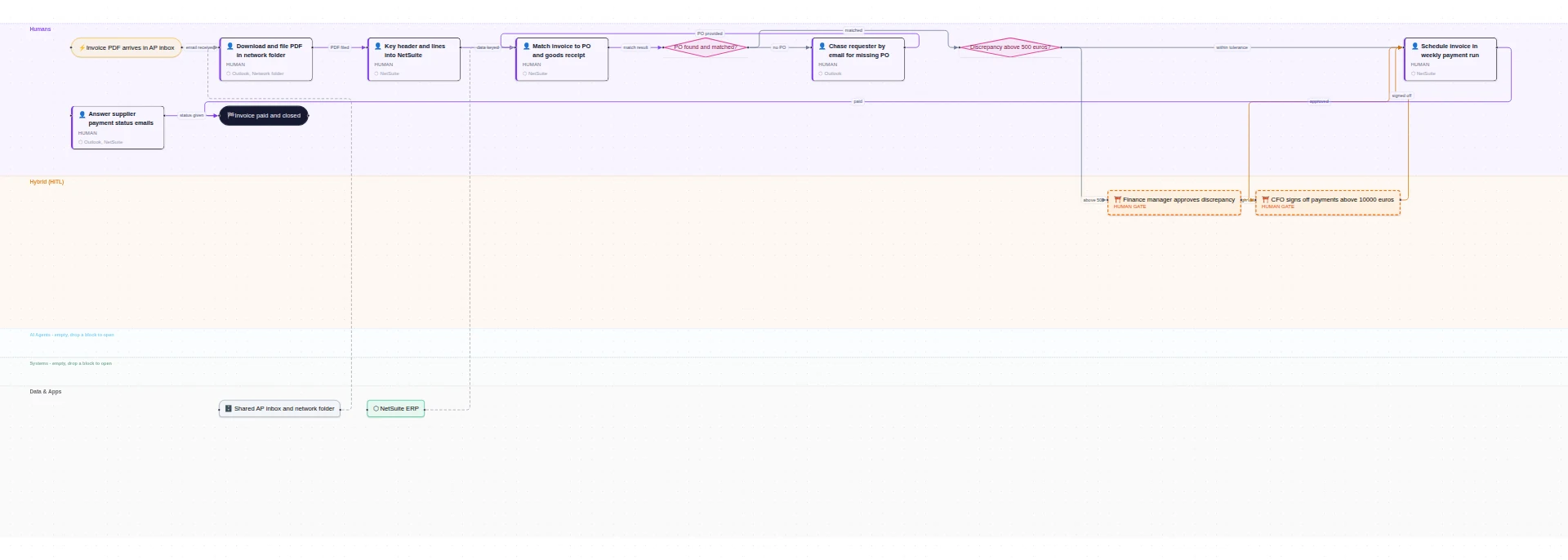
Every generated map is a real model, not a picture. Steps carry executors, systems, volumes and minutes per run. Decisions branch. Gates mark where humans approve. Data and applications appear as first-class blocks connected to the steps that touch them.
The map that answers "who should do this"
Where this tool departs from every classic mapper: the canvas is organised in lanes by executor: Humans, Hybrid, AI Agents, Systems, Data. The point of mapping a process in 2026 is not to document it; it is to decide, step by step, what stays human and what an AI agent can take over, with what supervision. The map and that decision are the same artifact. Read more about the redesign side in business process redesign with AI agents.
From map to numbers and delivery
Because the map is structured, everything downstream is one click away: a governance check across 11 rules, a business case in your currency built from your volumes and live AI model prices, build-ready micro-task blueprints per step, and a delivery board with owners and due dates. See the whole flow on the home page, or compare with classic tools in process mapping software.