Describe a process in plain words. An AI consultant maps how it works today, proposes which steps
move to AI agents and which stay human, and hands you governance checks, a business case in euros
and a delivery plan. All on one canvas.
🇪🇺 The first process design studio with EU AI Act, GDPR, NIS2, DORA and ISO 42001 advisors built in
A real to-be design: agents doing the work, controls supervising them, humans deciding what matters.
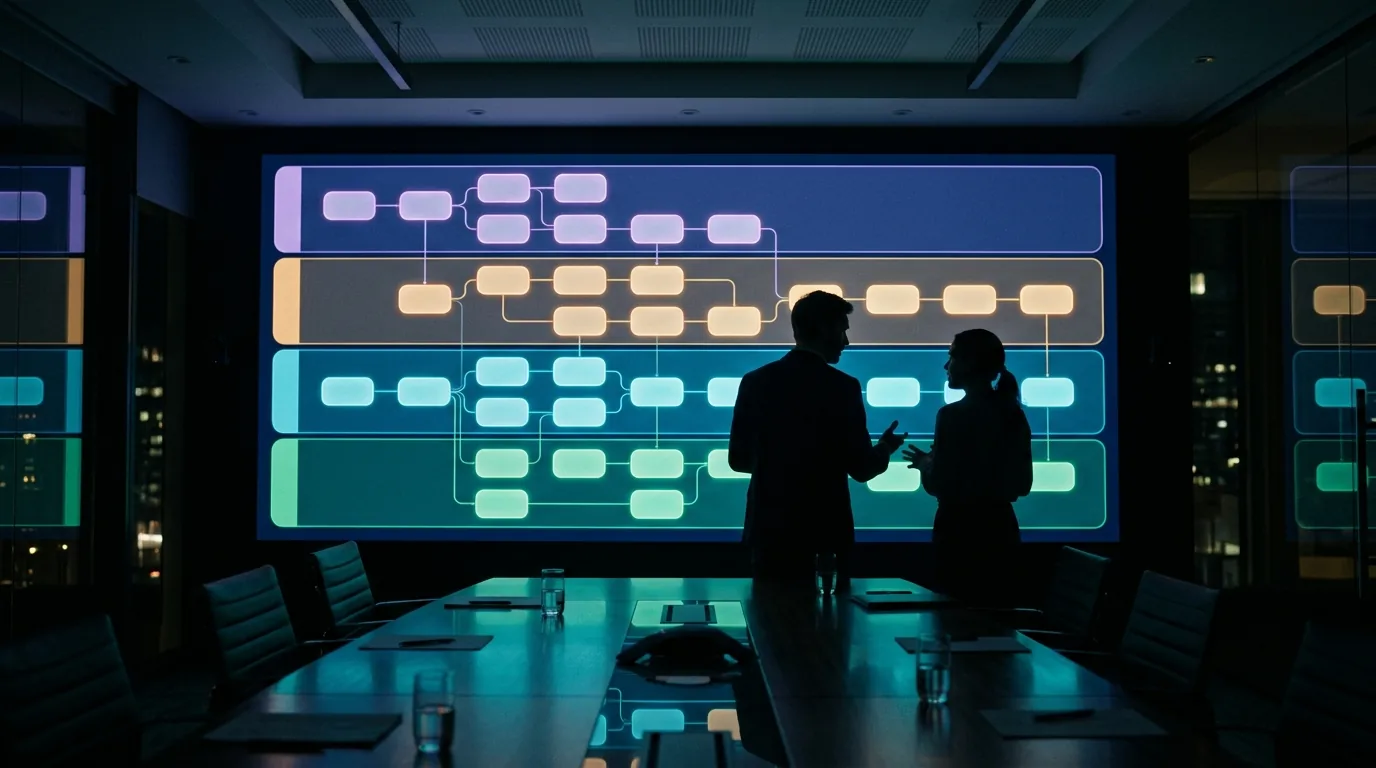
Built for the room where the decision happens.
Workshops, steering meetings, pitches: the canvas reads from the back of the room.
The interview room
A consultant asks, the brief writes itself
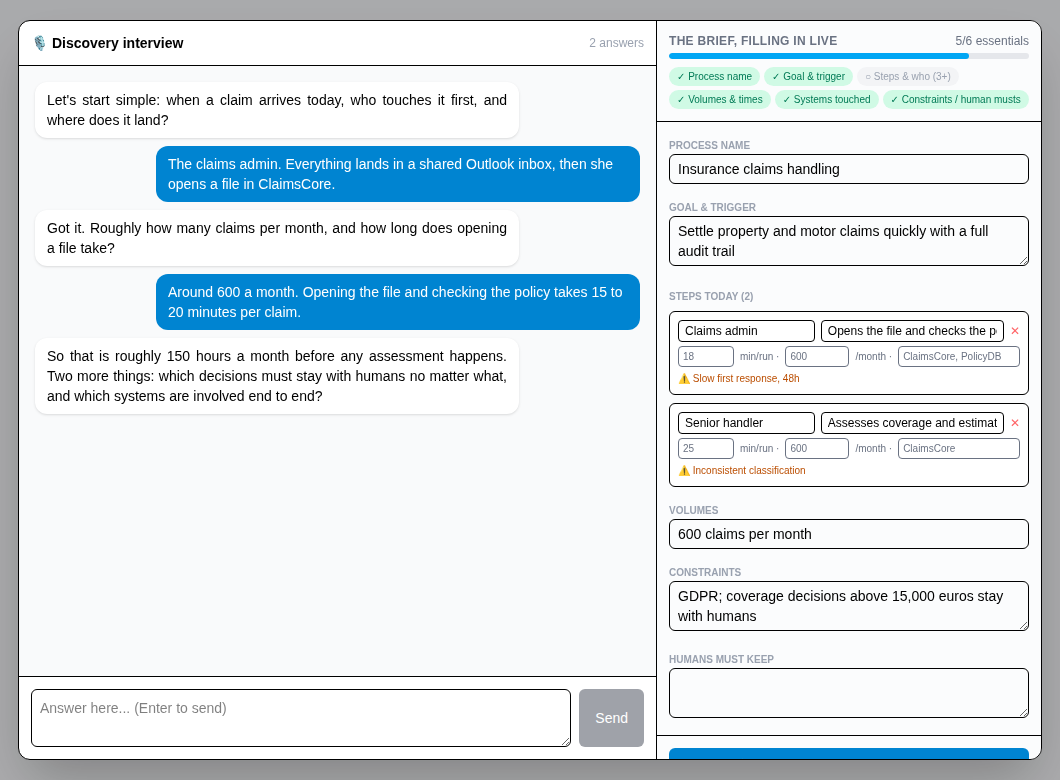
No blank page. The discovery consultant asks short, concrete questions and mirrors the process
back while the brief board fills in live: steps, volumes, systems, constraints. Every field stays
editable by hand, the session can pause and resume, and one click generates the design from the
board.
Prefer writing? The Describe door reads your text and, when key facts are missing, asks two to
four targeted questions before designing. Details in AI process
mapping.
The interview room, mid-session: 5 of 6 essentials already captured.
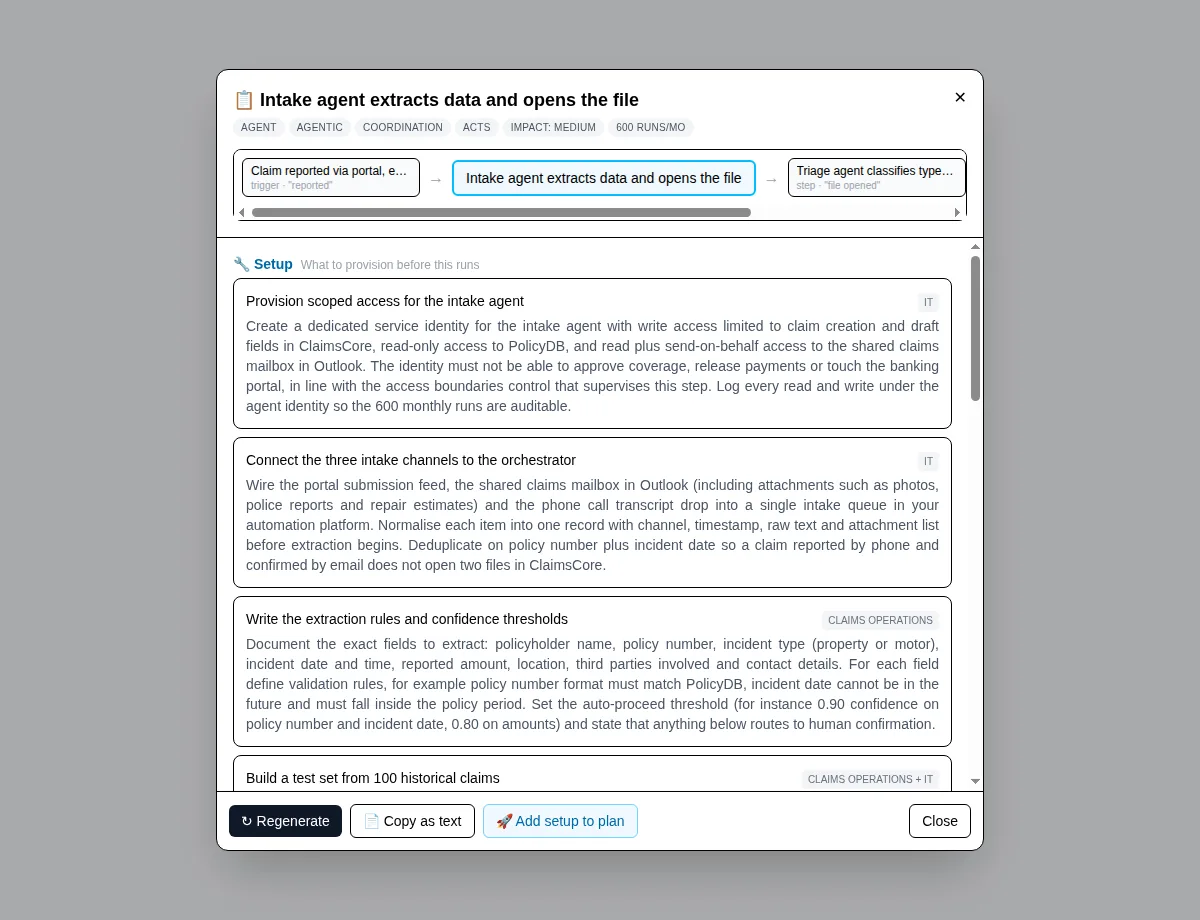
A real generated blueprint: scoped access, intake channels, extraction rules, a test set.
Micro-task blueprints
Every step opens into a build-ready blueprint
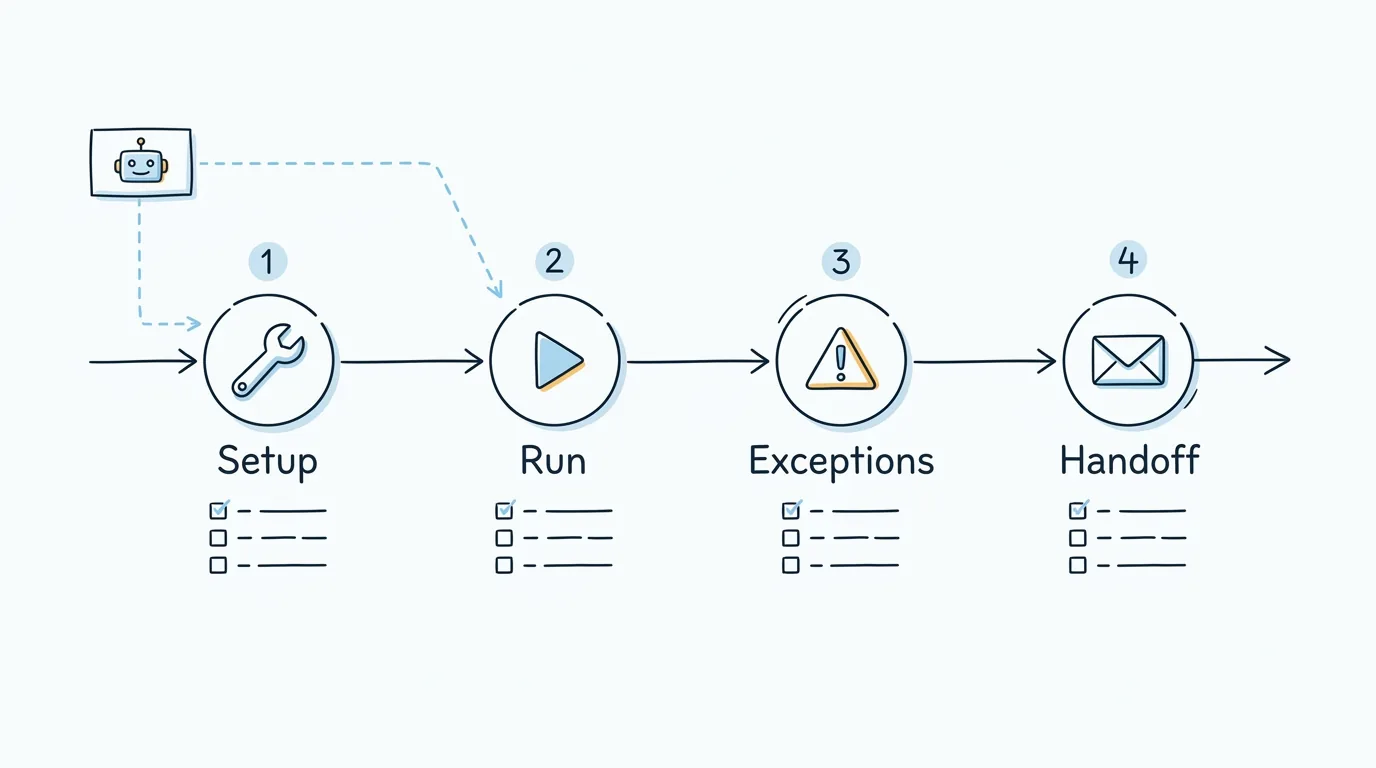
Select any to-be step and the AI writes its operating procedure grounded in the step's real
context: the systems it touches, the steps that feed it, the controls that supervise it. Four
phases, always: setup, execution flow, exceptions, handoff, concrete enough that the
implementation team can build from the list alone.
Copy it as text, ship it in the PDF annex, or send the setup phase straight to the delivery
board. More in the AI SOP generator.
Project control
Then run the rollout, not just the workshop
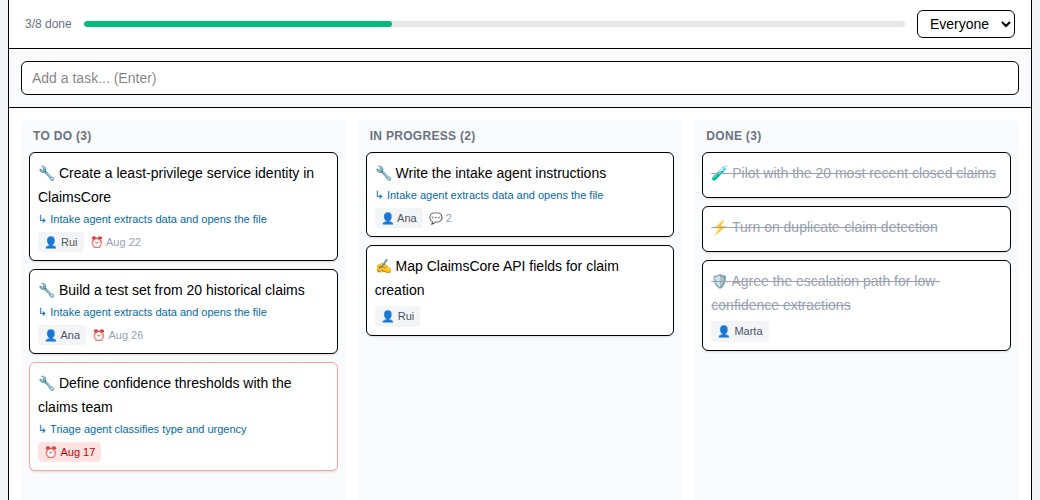
Blueprints, quick wins and governance findings become tasks on a kanban with owners, due dates
and a dated follow-up log. Overdue work turns red. A project control view shows every process's
rollout at a glance, and the executive PDF ships with the implementation plan grouped by step.
The delivery board: 3 of 8 done, one task already late and impossible to ignore.
One process, one team, three time zones.
The design travels: share it, comment on it, and keep every version, wherever your people are.
Work together, anywhere
The whole organisation sees the same map
A redesign only survives if the people who run the process recognise themselves in it. So the
design never stays locked on one laptop: it moves to whoever needs to see it, react to it, or
approve it, on any device, anywhere in the world.
Share a live read-only link that opens on any device, no account needed, and revoke it whenever you want.
Anyone can comment on any block straight from that link ("this step changed last year"), and the notes land in your studio to resolve.
Sponsors follow the rollout on a shared delivery-plan page: progress, health and go-live countdown, without ever opening the canvas.
Named versions freeze each review round ("v1 client workshop"), diff against the current design, and restore safely.
Everything the room needs to decide
Governance built in, not bolted on
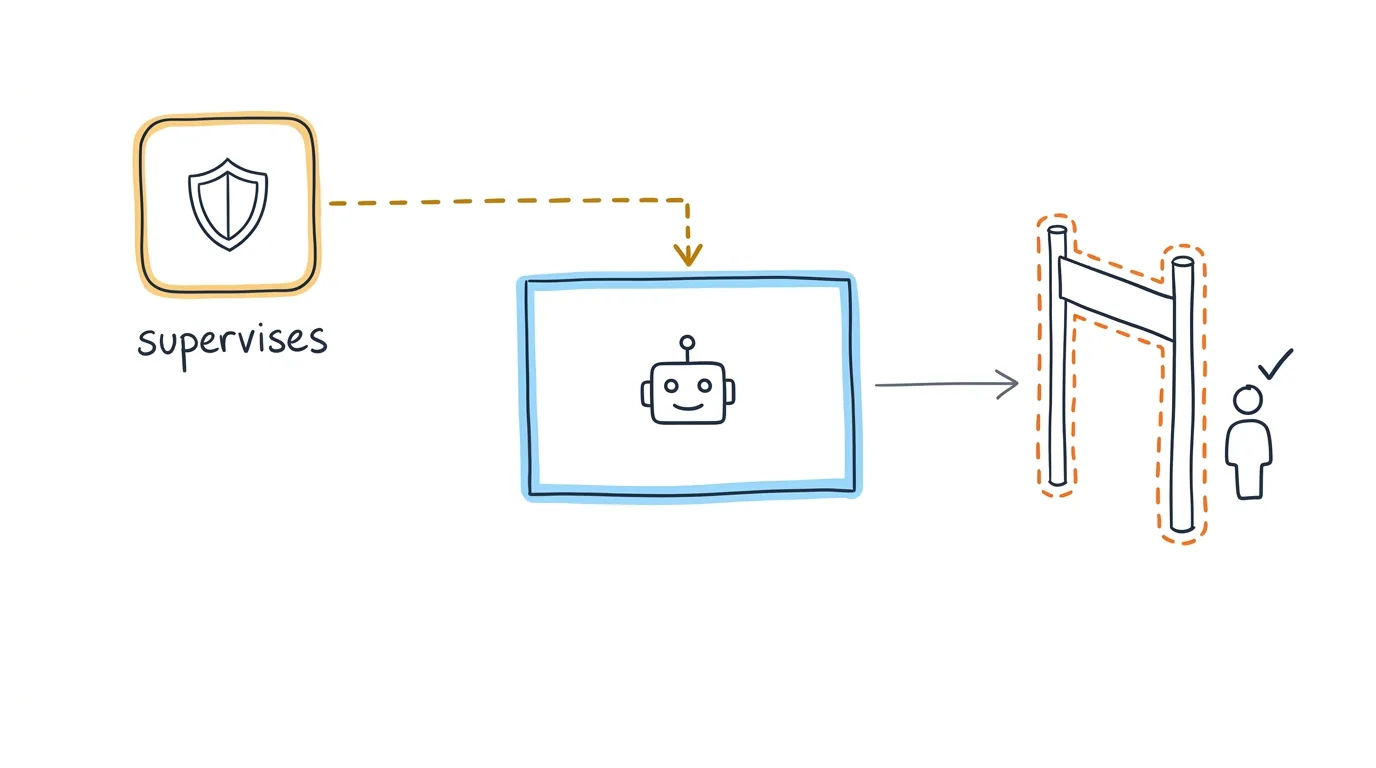
Preventive, detective and corrective controls supervise your agents. Human gates guard the
decisions that must stay human. A governance check reads the whole design against 11 rules and
proposes one-click fixes.
A business case in euros
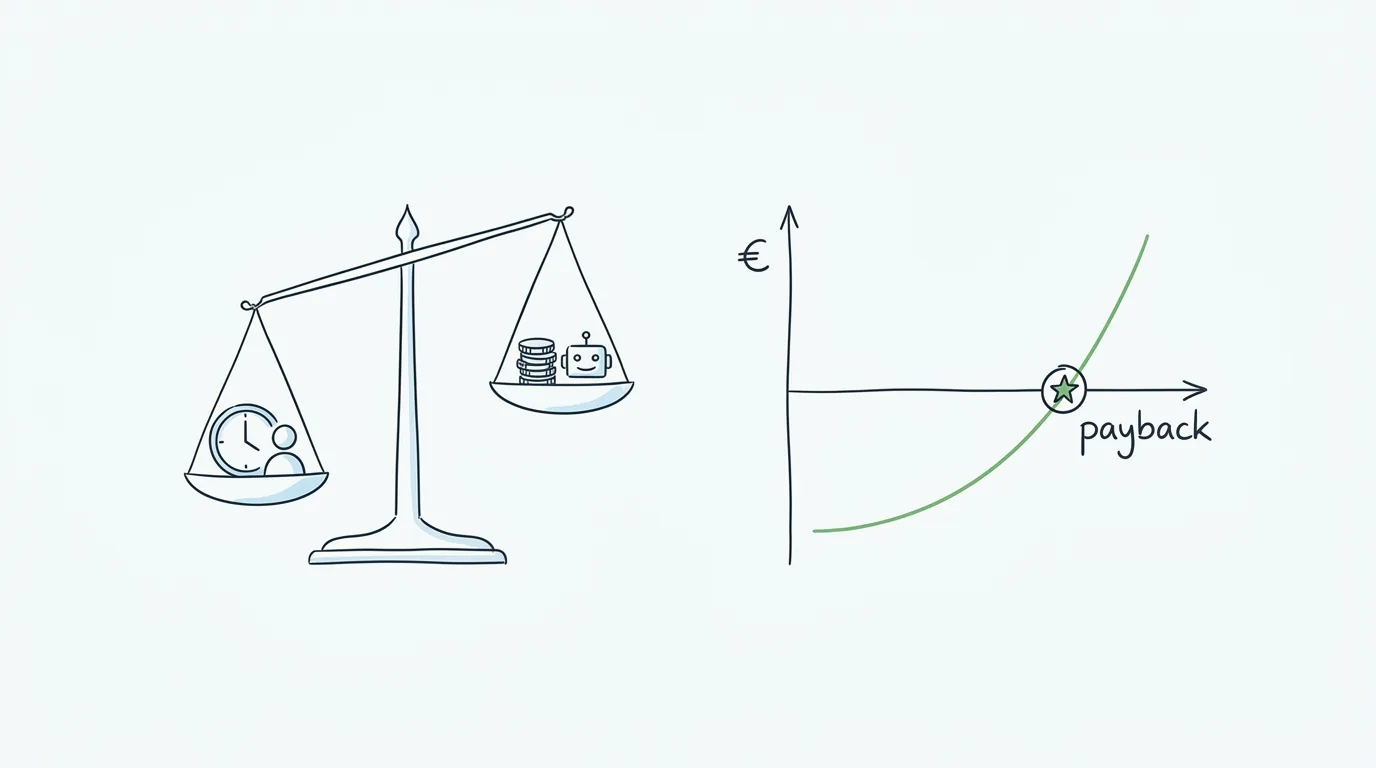
Human hours saved versus real AI running costs, computed from live model prices. Implementation
sized per agent, payback month and 12-month ROI, and an executive narrative written on top of
your numbers, never instead of them.
From design to delivery
Every step breaks into a build-ready blueprint: setup, execution flow, exceptions, handoff. Send
them to a delivery board with owners, due dates and follow-ups, and export the whole thing as an
executive PDF.
🇪🇺
Three EU laws, read at design level
Built-in advisors read your design against the EU AI Act, GDPR (data minimisation on every hand-over; Art. 22, no solely automated decisions about people) (prohibited-practice
signals, Annex III high-risk candidates, a readiness annex in the PDF), NIS2
(essential-entity sectors must show the incident path: 24h/72h/1 month) and DORA
(financial entities: ICT third-party register for cloud models, 4h/72h incident clocks), plus an ISO 42001 quality lens scoring every agent on owner, impact, data, verification and disclosure. Heuristic
signals with the article cited, never legal advice.
🔮
Stress-test the numbers
What-if sliders scale the volumes, squeeze the human capacity or triple the AI prices, and the
whole case recomputes: net, payback, backlog warnings, and the month the redesign breaks even,
drawn on a 12-month curve.
⧉
Plays well with your stack
Export BPMN 2.0 that opens in Signavio, Camunda, Bizagi or draw.io; build-ready agent specs in
markdown for whoever implements; a PPTX deck for the steering meeting; and PDF, PNG and JSON.
Your design is never locked in.
Who it is for
Built for the people in the room
Consultants running AI transformation workshops. Operations leaders who need to answer "which steps
should an agent do" with more than a gut feeling. Teams that want the map, the guardrails and the
numbers before they build anything.